Yes, you can use bread flour for focaccia, and for most home bakers it is the better choice. Bread flour’s higher protein (about 12 to 14 percent) builds a stronger gluten network, which gives focaccia its tall, airy crumb and chewy, pull-apart interior. The one adjustment: bread flour is thirstier than all-purpose, so your dough needs a few extra grams of water to stay as loose and bubbly as classic focaccia demands. Get that right and a standard home oven turns out focaccia with a bakery-style crumb, crisp olive-oiled edges, and deep dimples that hold pools of oil and salt.
If your focaccia keeps coming out dense, bready, or closer to sandwich loaf than the crackly, cloud-light slabs you see in bakery windows, the flour is often the silent culprit, in one direction or the other. We have baked dozens of batches side by side with all-purpose flour, bread flour, and blends, and the difference is consistent enough to build a method around. This guide gives you that method: what bread flour actually changes, the single hydration tweak that makes it work, a tested bread flour focaccia recipe, and the answers to the questions everyone asks when they make the switch.
Here is exactly how to use bread flour for focaccia, from the science of the protein to the pan it bakes best in.
Key Takeaways
- Bread flour works for focaccia and usually beats all-purpose flour for structure: its 12 to 14 percent protein builds the gluten that holds those signature big, irregular holes.
- The one adjustment is water. Swap bread flour into a recipe written for all-purpose and increase the water by about 2 percent of the flour weight, or the dough turns stiff and the crumb turns tight.
- High hydration is the point: aim for 75 to 80 percent water and let time, not kneading, build the dough. Three or four folds over two hours do the work.
- Do not skip the olive oil in the pan. A generous layer fries the bottom crust crisp while the inside steams open, and bread flour’s strength keeps the slab from going soggy.
- Bake at 450 degrees F in a rimmed half sheet pan for 22 to 28 minutes until deeply golden. Bread flour focaccia can take the color; pale focaccia tastes doughy no matter the flour.
Table of Contents

What Bread Flour Changes in Focaccia
Focaccia lives or dies on gluten. When flour meets water, its proteins link into gluten strands, and those strands form the stretchy netting that traps the gas yeast produces. More protein means more potential netting. All-purpose flour carries roughly 10 to 12 percent protein, while bread flour runs 12 to 14 percent, and that gap is exactly the difference between a focaccia that rises tall and one that spreads flat and tight. The team at Baker Bettie lays out the flour protein spectrum clearly in her guide to the varieties of wheat flour, and the short version is that bread flour sits in the sweet spot for anything that should be chewy and open-crumbed.
In practice, that extra protein gives you three things. First, structure: the dough holds its height in the pan instead of slumping, so the baked slab comes out thick with a real interior. Second, chew: the crumb has that elastic, tear-with-your-hands quality bakery focaccia is known for. Third, forgiveness: a stronger dough tolerates the long, wet fermentation that creates flavor without collapsing under its own weight. The trade-off is real but small, and the fix is in the next section.
If you have already worked with bread flour on the pizza side, none of this will surprise you. Our deep dive on bread flour for pizza dough covers the same protein logic from the crust angle, and focaccia rewards it even more because the dough is wetter and the rise is longer.
The One Adjustment: Water
Here is the rule that makes everything else work: when you bake focaccia with bread flour, bump the hydration up by about 2 percent of the flour weight compared to what you would use with all-purpose. Bread flour absorbs more water, and a dough that felt perfectly slack with all-purpose will feel firm and dry with bread flour at the same ratio. Firm dough means small holes, a tight crumb, and the dreaded bready texture.
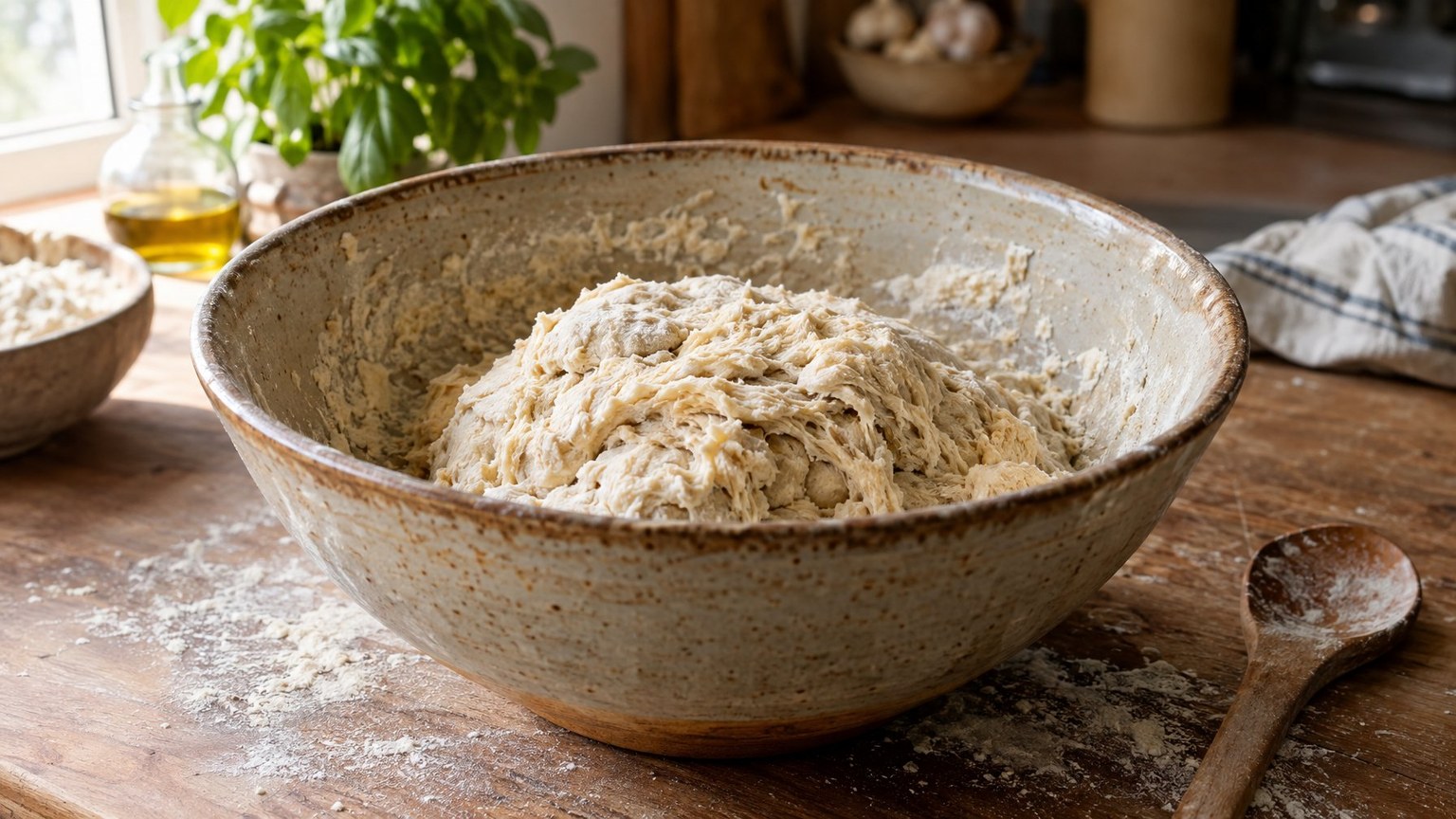
Concretely: for 500 grams of bread flour, use 375 to 400 grams of water (75 to 80 percent hydration) plus 25 grams of olive oil. The dough should look wet, shaggy, and almost too loose when you mix it. That is correct. Over two hours, give it three or four sets of folds with a wet hand or a dough scraper, and watch it transform from paste into a smooth, billowing dough that jiggles when you shake the bowl. For the full framework behind those numbers, our guide to pizza dough hydration explains what hydration percentage actually controls, and the same math applies to focaccia dough word for word.

Two habits protect the dough while it develops. Keep your hands and tools wet rather than adding bench flour, because every extra spoonful of flour stiffens the batch. And give the dough time over force: an overnight rest in the fridge builds noticeably more flavor than a same-day rise, and cold dough is far easier to handle when you transfer it to the oiled pan.
A Bread Flour Focaccia Recipe That Works
This is the formula we bake most: simple, high hydration, built for bread flour, and reliable in a standard 450 degree F home oven. It fills a half sheet pan (about 13 by 18 inches) and feeds a crowd.
Ingredients: 500 grams (about 4 cups) bread flour, 390 grams (about 1 2/3 cups) lukewarm water, 10 grams (2 teaspoons) fine sea salt, 4 grams (1 1/4 teaspoons) instant yeast, 25 grams (2 tablespoons) olive oil for the dough, plus 3 to 4 tablespoons olive oil for the pan and another 2 tablespoons for the top. Topping: flaky salt, fresh rosemary, and halved cherry tomatoes or sliced olives if you like. A bag of King Arthur organic bread flour is our default here because its protein level is consistent bag to bag, which matters more than brand loyalty when you are dialing in hydration. For the yeast, SAF instant yeast in the one-pound pouch keeps for years in the freezer and outperforms packets every time.
Step 1: Mix. Whisk the flour, salt, and yeast in a large bowl. Add the water and the 25 grams of olive oil, then stir with a spatula until no dry flour remains, about one minute. The dough looks rough. Cover the bowl and rest it 30 minutes.
Step 2: Fold and rise. Over the next 2 hours, perform three or four sets of folds: wet one hand, reach under the dough, stretch it up, and fold it over itself, rotating the bowl a quarter turn each fold, four or five folds per set. The dough goes from shaggy to smooth and starts to dome in the bowl. At this point you can bake same day (rest 45 more minutes) or refrigerate overnight for better flavor; our pick is overnight.
Step 3: Pan and proof. Pour 3 tablespoons of olive oil into a rimmed half sheet pan and coat the bottom and sides. Tip the cold dough straight into the center, turn it to coat in oil, and gently stretch it toward the corners. If it resists, wait 15 minutes and stretch again. Cover and proof 60 to 90 minutes, until puffy and jiggly.
Step 4: Dimple and top. Drizzle 2 tablespoons of olive oil over the surface, then press your fingertips straight down to the pan, dimpling the entire surface and pushing the dough into the corners as you go. This is the signature move, and it is also functional: the dimples keep the slab from puffing into a dome and create pockets for oil and salt. Scatter rosemary, flaky salt, and any toppings. For a dimpled, topping-ready slab, the recipe method at Handle the Heat’s focaccia guide mirrors this same gentle, no-tear approach.

Step 5: Bake. Heat the oven to 450 degrees F with a rack in the center. Bake 22 to 28 minutes, until the top is deep golden and the edges have pulled slightly from the pan. Immediately slide a spatula under the slab and lift it onto a cooling rack so the bottom crust stays crisp, then brush with a little more olive oil if you want that bakery sheen. Let it rest at least 15 minutes before cutting; the interior is still setting, and cutting early squeezes the steam out and tightens the crumb. Using a good olive oil matters here: a bottle of Colavita extra virgin olive oil gives the top fruitiness and the bottom that fried, golden crunch.
Here is the before-and-after worth picturing: last week your focaccia came out of the oven pale and tight, and you sliced it into dense squares that ate like dinner rolls. This time the slab is tall and burnished, the crumb pulls apart in ragged, oil-slicked pieces, and the bottom shatters a little when you bend a corner. Same oven, same pan, one flour swap plus two extra tablespoons of water. That gap is exactly why this question matters, and why bread flour earns its spot in the focaccia pantry.
Bread Flour vs All-Purpose for Focaccia
Both flours make focaccia, so the honest answer is that bread flour wins on texture and all-purpose flour wins on softness. With bread flour you get height, chew, and those big open holes. With all-purpose flour you get a shorter, more tender, cake-like crumb that some people prefer for breakfast focaccia or for splitting and filling like sandwich bread. Neither is wrong; they are two different breads. The case for bread flour is stronger when the focaccia is the meal: it stands up to slicing for sandwiches, to heavy toppings, and to a day in a bread bag without going limp.

Three real-world notes from the side-by-side tests. First, blends work: half bread flour and half all-purpose gives you most of the open crumb with a softer bite, and it is a good bridge if your household is split. Second, measure by grams, not cups; a packed cup of bread flour can carry 15 percent more flour than a sifted one, which silently undoes your hydration math. Our comparison of all-purpose flour for pizza dough walks through the protein and handling differences in more depth, and almost all of it transfers to focaccia. Third, if your focaccia came out tough rather than tender, the cause is usually overworked dough or too little water, not the flour itself, so fix the method before you blame the bag.
Toppings, Serving, and Leftovers
Classic focaccia is a Genoese street food at heart: olive oil, salt, and rosemary, nothing more, and the Ligurian originals that inspired bakers worldwide are documented in this piece on traditional focaccia. Bread flour’s sturdy crumb handles the modern maximalist versions too: halved cherry tomatoes pressed in before baking, thinly sliced potatoes and onions, olives, or a scattering of grated parmesan in the last five minutes. Keep wet toppings light; a bread this open soaks up moisture fast.
The olive oil deserves the same attention as the flour. Focaccia spends its whole life in oil: it proofs in an oiled pan, it bakes in oil, and it finishes with oil. That means the flavor of the oil goes straight into the crumb. A fresh, fruity extra virgin oil tastes clean and peppery; a stale or bland oil tastes like nothing, which is worse than it sounds in a bread this simple. Olive Oil Times’ guide to olive oil is a practical starting point for reading labels and picking a bottle worth pouring.
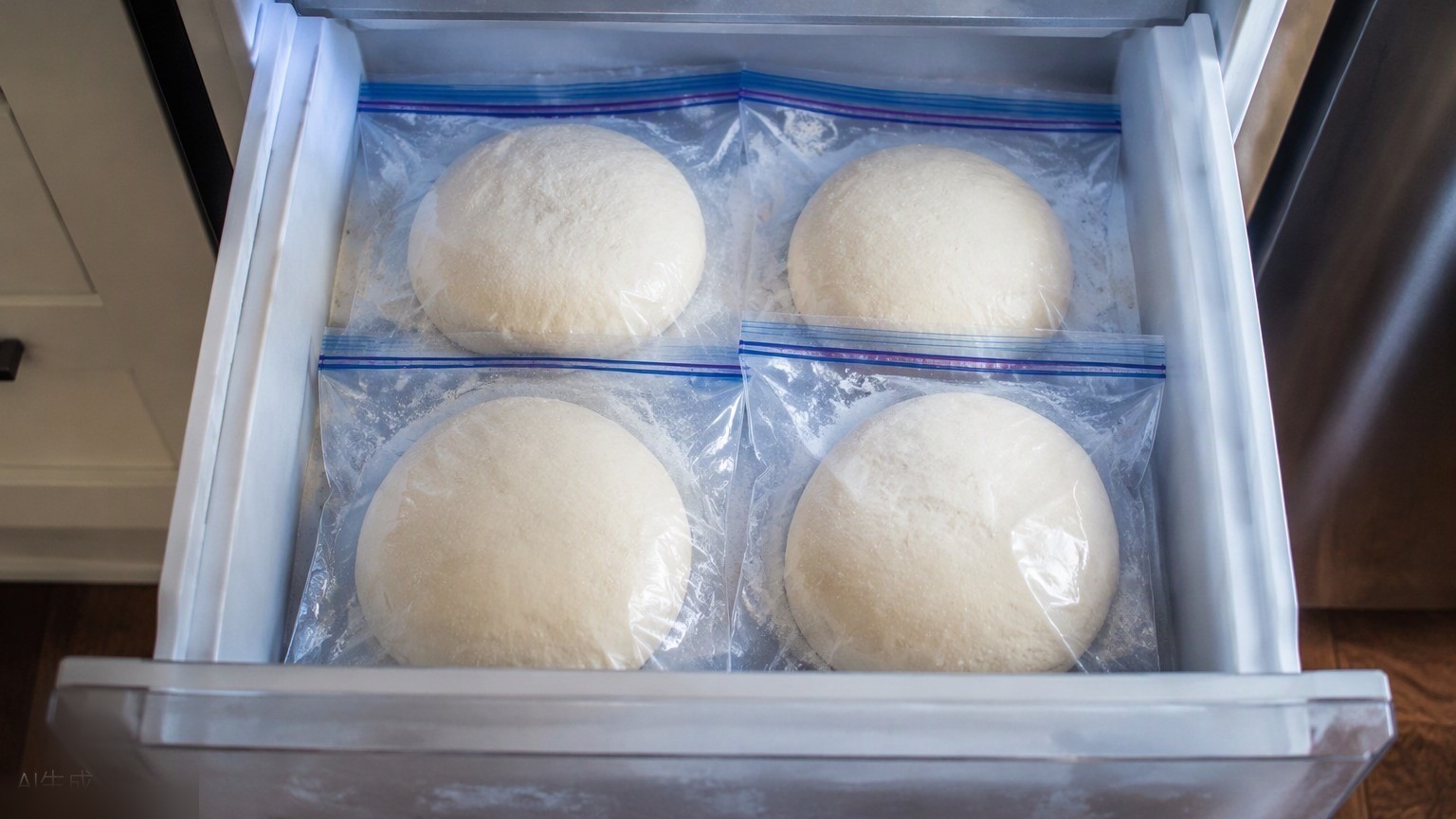
Serve focaccia warm or at room temperature, cut into rough squares or strips, ideally within a few hours of baking when the crust is at its crispest. To store, cool it completely, then keep it in a paper bag inside a bread box for up to two days; a sealed plastic bag softens the crust by morning. Revive day-old slices in a 350 degree F oven for five minutes. If a whole slab is more than you need, freeze half: wrap it well, freeze for up to a month, and reheat straight from frozen at 375 degrees F for about ten minutes. For a creative twist on a second batch, our focaccia art guide turns the dimpled surface into a vegetable canvas, which is a genuinely fun project with kids and a showpiece at the table.
Skip the oil-and-salt fundamentals and the loaf will still bake, but it will taste flat and forgettable, the kind of bread people politely nibble once. Make it with good flour, real olive oil, and the patience to let the dough go loose and bubbly, and the same simple ingredients turn into the thing people tear into and ask about. That difference costs nothing but attention.
Frequently Asked Questions
Can you use bread flour for focaccia?
Yes, and it is usually the better choice. Bread flour’s higher protein (12 to 14 percent) builds the strong gluten network that holds focaccia’s tall, open crumb and chewy texture. Just raise the hydration by about 2 percent compared to all-purpose flour so the dough stays loose and bubbly.
What is the difference between bread flour and all-purpose flour in focaccia?
Protein content. Bread flour runs 12 to 14 percent protein, all-purpose 10 to 12 percent. In focaccia that gap means bread flour gives more rise, a chewier bite, and bigger holes, while all-purpose gives a softer, more tender, cake-like crumb. Both work; they make two different styles of focaccia.
Do you have to knead bread flour focaccia dough?
No. High-hydration focaccia doughs develop gluten through time and folds instead of kneading. Mix the shaggy dough, then give it three or four sets of folds over about two hours. The dough transforms from rough paste into a smooth, billowing mass without ten minutes of kneading, and the long, gentle development is what creates the open crumb.
What hydration should bread flour focaccia be?
Aim for 75 to 80 percent water relative to the flour weight: 375 to 400 grams of water per 500 grams of bread flour, plus about 25 grams of olive oil. Bread flour absorbs more water than all-purpose, so a formula written for all-purpose may need 10 extra grams of water to feel equally slack and produce the same open crumb.
Can I use 00 flour or pizza flour for focaccia?
Yes, with a mindset shift. Italian 00 flour is finely milled and usually around 12 to 13 percent protein, so it makes excellent focaccia with a silky crumb. The difference is feel: 00 flour absorbs water differently and the dough may need a short rest before stretching. Treat it like bread flour, watch the dough instead of the clock, and expect a slightly finer, more even interior.
Why did my bread flour focaccia turn out dense?
Dense focaccia almost always traces back to one of three things: not enough water (bread flour needs that extra 2 percent), not enough time (underproofed dough cannot expand), or early cutting (slicing before the interior sets squeezes out steam and tightens the crumb). Fix those three before blaming the flour, because bread flour itself works.
How long does bread flour focaccia keep?
At its best within a few hours of baking, still good for two days at room temperature in a paper bag or bread box, and freezable for up to a month wrapped tightly. Never seal warm focaccia in plastic, which traps steam and turns the crisp bottom crust leathery. Refresh day-old pieces in a 350 degree F oven for five minutes.