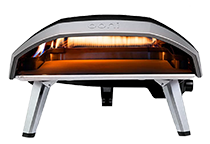
A cordierite pizza stone is a baking slab made from cordierite, a magnesium aluminosilicate mineral that is fired into a ceramic which barely expands when heated. That near-zero thermal expansion is the entire point: while plain ceramic stones crack under the temperature swings of a hot home oven or grill, cordierite shrugs them off, which is why most quality pizza stones sold today are made from it. Below is what cordierite actually is, how it compares to ceramic and steel, and how to use and care for one so it lasts for decades of Friday night pizzas.
If you have already lost a cheap stone to a loud mid-preheat crack, you know the frustration. We have baked on cordierite stones in home ovens, on grills, and in outdoor pizza ovens for years, and the material earns its reputation: heat it to your oven’s maximum, launch a pizza onto it, and it delivers a blistered, pizzeria-style bottom instead of the pale, floppy crust a sheet pan gives you. This guide covers the material science in plain English, the cordierite vs ceramic vs steel decision, and the use-and-care routine that keeps a stone alive.
Here is what cordierite is, why it outperforms other stone materials, how to use it from the first preheat, and what to look for when you buy.
Key Takeaways
- Cordierite is a mineral ceramic with extremely low thermal expansion, so it survives the heat swings that crack ordinary ceramic stones.
- Its porous surface wicks moisture out of the dough bottom, which is what turns a soggy crust crisp and blistered.
- Preheat the stone for 45 to 60 minutes at your oven’s highest temperature before launching a pizza.
- Never put a hot cordierite stone under water or on a cold surface. Thermal shock is still the number one killer, even of cordierite.
- Choose a stone at least 0.5 inch (12 mm) thick and roughly 15 x 12 inches for a standard home oven.
Table of Contents

What Is Cordierite?
Cordierite is a magnesium iron aluminium cyclosilicate mineral, chemically (Mg,Fe)2Al4Si5O18, best known to rockhounds as the blue-gray gemstone iolite. In geology it forms in hot, low-pressure metamorphic rocks, and it has one property that matters enormously in a kitchen: its crystal structure expands and contracts very little when heated and cooled. Geology.com’s cordierite reference notes that the mineral is prized in refractory ceramics precisely because it withstands repeated, severe temperature changes without shattering.
To make a pizza stone, manufacturers grind cordierite-rich material, press it into a slab, and fire it at high temperature. The result looks like an ordinary beige ceramic tile but behaves very differently under heat. A standard ceramic slab expands enough during a 500°F preheat to build serious internal stress, and one cold splash or cool draft can finish it. Cordierite’s expansion is a fraction of that, so the slab simply does not build the same stress. That is the entire secret behind the material’s dominance in pizza stones, kiln furniture, and catalytic converter cores.
Why Cordierite Works for Pizza
A pizza stone has two jobs, and cordierite does both well. First, it stores heat. A thick stone charged for an hour holds enormous thermal energy, and when a room-temperature dough ball lands on it, that stored heat flashes the bottom of the crust, setting it fast before toppings waterlog it. Second, it wicks moisture. Cordierite stone is porous, and the pores pull surface water out of the dough the way a taut deck oven floor does, which is what produces the crisp, blistered, leopard-spotted bottom that a sheet pan never can. Our guide to pizza oven temperatures covers the heat side of that equation in detail.

The trade-off is that cordierite heats and cools more slowly than steel. A cordierite slab needs that full preheat to work its magic, and it gives the heat back gently rather than violently. For a home oven capped around 500 to 550°F, that gentleness is an advantage: the crust browns evenly instead of scorching in spots before the top finishes. Black Rock Grill’s stone material comparison reaches the same conclusion from the equipment side: cordierite has become the default pizza stone material because it balances heat retention, porosity, and shock resistance better than alternatives at home-oven prices.
Cordierite vs Ceramic vs Steel

Three surfaces dominate the homemade pizza conversation, and each wins a different kitchen. The short version: cordierite is the durable all-rounder, plain ceramic is the budget gamble, and steel is the conductivity champion that costs more and weighs a lot.
| Surface | Heat Behavior | Crack Risk | Best For |
|---|---|---|---|
| Cordierite stone | Stores lots of heat, releases it steadily; porous surface dries the crust. | Very low; survives thermal shock that kills ceramic. | Home ovens and grills; cooks who want pizzeria bottoms without babysitting. |
| Ceramic stone | Similar to cordierite when new, but often thinner and less consistent. | High; one cold splash or hot spot can snap it. | Budget, occasional use, gentle ovens. |
| Baking steel | Conducts heat roughly 18 times faster than stone; sears the bottom in minutes. | Essentially zero; it cannot shatter. | Fast weeknight pizzas, bread bakers, broiler finishing. |
Steel is the honest challenger. A slab like the Baking Steel Original transfers heat into dough far faster than any stone, so a pizza bakes in minutes at lower temperatures, and it will never crack because it is a quarter inch of solid seasoned carbon steel. The downsides are weight (15 pounds), price, and the fact that it does not absorb moisture the way porous stone does, so very wet doughs can steam slightly on the bottom. Our head-to-head pizza stone vs baking steel comparison goes deeper on which surface suits your oven and style.
Plain ceramic deserves honesty too. A good ceramic stone bakes beautifully; the problem is survivability. Baking Steel’s write-up on why stones crack lays out the failure modes: thermal shock from wet or cold contact, thin spots, and uneven heating. Cordierite exists as the answer to exactly that list. If you are choosing between a cheap ceramic stone and a cordierite one, the cordierite usually costs only a little more and outlives several ceramics.
How to Use a Cordierite Pizza Stone

Three habits separate stones that last decades from stones that die young. None of them are complicated.
Preheat It With the Oven
Put the stone in a cold oven, then turn the oven to its highest setting (500 to 550°F for most home ovens) and give the stone a full 45 to 60 minutes. The stone heats with the oven, so it never experiences a thermal gradient, and the long soak lets the core reach the same temperature as the surface. America’s Test Kitchen’s preheat testing found that a stone charged for a full hour produces a measurably better crust than one rushed, because the stone’s stored heat, not the air temperature, is what sets the bottom of the pizza. Skipping the preheat is the single most common reason homemade pizza comes out pale on the bottom despite a screaming hot oven.
Launch With a Peel
Build the pizza on a pizza peel dusted with semolina, give it a quick shake to confirm it slides, then open the oven and launch with one confident forward-and-back motion. Hesitating halfway leaves the pizza folded over itself on the stone. If the dough sticks to the peel, lift the edge and blow a little air underneath; that puffs the dust layer and frees the pizza. Keep toppings restrained near the rim, because anything that slides onto the stone burns on and becomes tomorrow’s scraping job. Our cornmeal or semolina guide covers which dusting gives the cleanest release.
Let It Cool Slowly
After the bake, turn the oven off and leave the stone inside to cool with the oven, or set it on a trivet at room temperature. Do not run water over it, do not set it on a cold stone countertop while hot, and do not pull it out into a cold draft. Cordierite tolerates far more abuse than ceramic, but physics still applies: a 500°F core meeting cold water on the surface builds stress faster than even cordierite can absorb. A stone that cools gradually is a stone that stays whole. If you want to know how much heat it holds after the oven goes off, our how long a pizza stone stays hot guide has the numbers.
Caring for Your Cordierite Stone
Routine care is five minutes and no soap, ever. Once the stone is fully cool, scrape off stuck-on bits with a bench scraper or the scraper edge of a long-handled pizza oven brush, sweep the surface with stiff bristles, and wipe with a barely damp cloth only if something greasy remains. Then dry it thoroughly before storage. Water is fine in small, wiped amounts; soap is not, because the porous surface absorbs detergent and releases it into your next pizza.
Expect the stone to darken with use. A mottled brown and black patina is seasoning, not filth, and it does not affect performance or flavor. Skip the oiling instinct entirely: oil polymerizes into a sticky, smoky film inside the pores. For the full routine, stains, smells, and crack triage, see our how to clean a pizza stone guide and our notes on seasoning a pizza stone (spoiler: the stone seasons itself).
Treat the stone this way and the payoff shows up at the table: every pizza launches with the same confidence, the bottoms come out evenly blistered instead of patchy, and the stone quietly outlasts every other gadget in your kitchen. Treat it carelessly and you will be replacing it by spring, usually the night guests are already in the other room.
Buying a Cordierite Stone: What to Look For
Four specs separate a stone you will hand down from one you will return. Thickness first: choose at least 0.5 inch (12 mm), and 0.6 to 0.75 inch is better, because thin stones heat unevenly and crack sooner. Size second: a 15 x 12 inch rectangle fits a standard home oven rack with airflow on all sides and holds two baguettes or a pair of small pizzas; round 16 inch stones suit grill grates and pizza ovens. Material confirmation third: the listing should say cordierite explicitly, since “pizza stone” alone often means budget ceramic. Fit last: leave 1 to 2 inches of clearance on every side of the oven or grill cavity for air to circulate.
The Unicook 15 x 12 inch cordierite stone hits every one of those marks: 0.6 inch thick cordierite rated to 1450°F, a porous reversible surface, and a scraper included. It is the stone we would point a first-time buyer to, and the one this guide leans on. A quality cordierite stone in the 30 to 45 dollar range is not an extravagance; it is two or three takeout pizzas spent once, in exchange for better crust every single week.
Frequently Asked Questions
Is cordierite the same as ceramic?
Cordierite is a ceramic, but a special one. It is made from the mineral cordierite, which has extremely low thermal expansion, fired into a slab. Ordinary pizza stones are made from generic clay ceramics that expand much more when heated, which is why they crack far more easily. If a listing just says ceramic, assume it is not cordierite.
Can a cordierite pizza stone crack?
Yes, but it takes real abuse. Cordierite survives the temperature swings that destroy ceramic, yet it can still crack from impact, from being dropped, or from extreme thermal shock such as cold water poured on a 500°F stone. Put it in a cold oven, preheat gradually, and let it cool with the oven and it should last decades.
Do you need to season a cordierite pizza stone?
No. A cordierite stone seasons itself through normal baking as starches and oils work into the pores. Never rub oil into it deliberately; oil polymerizes into a sticky film that smokes and turns rancid in the porous surface. Just bake on it, scrape it clean, and let the patina build naturally.
How hot can a cordierite pizza stone get?
Quality cordierite stones are rated around 1450°F (787°C), far beyond anything a home oven or grill can produce. Even outdoor pizza ovens that top out near 900 to 950°F sit comfortably within the material’s rated range, which is one reason cordierite is the standard stone material for those ovens too.
Can you use a cordierite stone on a grill?
Yes, cordierite is one of the best stone materials for grills because it tolerates the intense, uneven heat and flare-ups better than ceramic. Keep the lid closed as much as possible, preheat with the grill, and make sure the stone fits with clearance around the edges so heat can circulate.
How thick should a cordierite pizza stone be?
At least 0.5 inch (12 mm), and 0.6 to 0.75 inch is ideal for home ovens. Thicker slabs store more heat and heat more evenly, giving a crisper bottom and better recovery between pizzas. Very thin stones heat fast but are fragile and prone to hot spots.
Is cordierite safe to cook on?
Yes. Fired cordierite is a stable, food-safe ceramic that has been used in pizza stones, kiln shelves, and even catalytic converters for decades. It contains no coatings to chip and releases nothing into food at baking temperatures. The only health rule is the care rule: no soap, because the pores absorb it.