Heat a pizza stone for at least 30 minutes, and ideally 45 to 60 minutes, at your oven’s highest setting before the first pizza goes in. The only number that truly matters is the stone’s surface temperature: 500 to 550°F (260 to 290°C) is the window where a pizza crust blisters, puffs, and crisps instead of steaming. A clock is a decent proxy, but an inexpensive infrared thermometer is the real answer, and this guide shows you exactly how long to heat your specific stone, in your specific oven, so every launch lands on a surface that is genuinely ready.
If you have ever timed the oven dutifully, launched a beautiful pizza, and pulled out a pale, floppy disc with a soggy bottom, you have met the consequences of a half-heated stone. It is the most common pizza night failure, and it is not your dough’s fault. We have measured stone surfaces with a thermometer across hundreds of bakes, and the gap between “the oven says it is hot” and “the stone is ready” is routinely 20 to 30 minutes. That gap is where great crusts go to die.
Here is why preheat time matters more than almost any other variable, a timing chart by stone type and oven, how to verify readiness without guessing, the mistakes that crack stones and ruin crusts, and how steel changes the math.
Key Takeaways
- Preheat a pizza stone for a minimum of 30 minutes and ideally 45 to 60 minutes at your oven’s highest setting.
- The target surface temperature is 500 to 550°F (260 to 290°C). An infrared thermometer reads it in two seconds; everything else is guessing.
- Put the stone in a cold oven and let it heat with the oven. Sliding a cold stone into a hot oven is the number one cause of cracked stones.
- Thin stones heat faster than thick ones; baking steel heats faster than either but holds less total heat for back-to-back pizzas.
- Every time you open the oven door during the preheat, you add several minutes to the wait. Resist the peeking.
Table of Contents
Why Preheat Time Matters More Than Oven Temperature
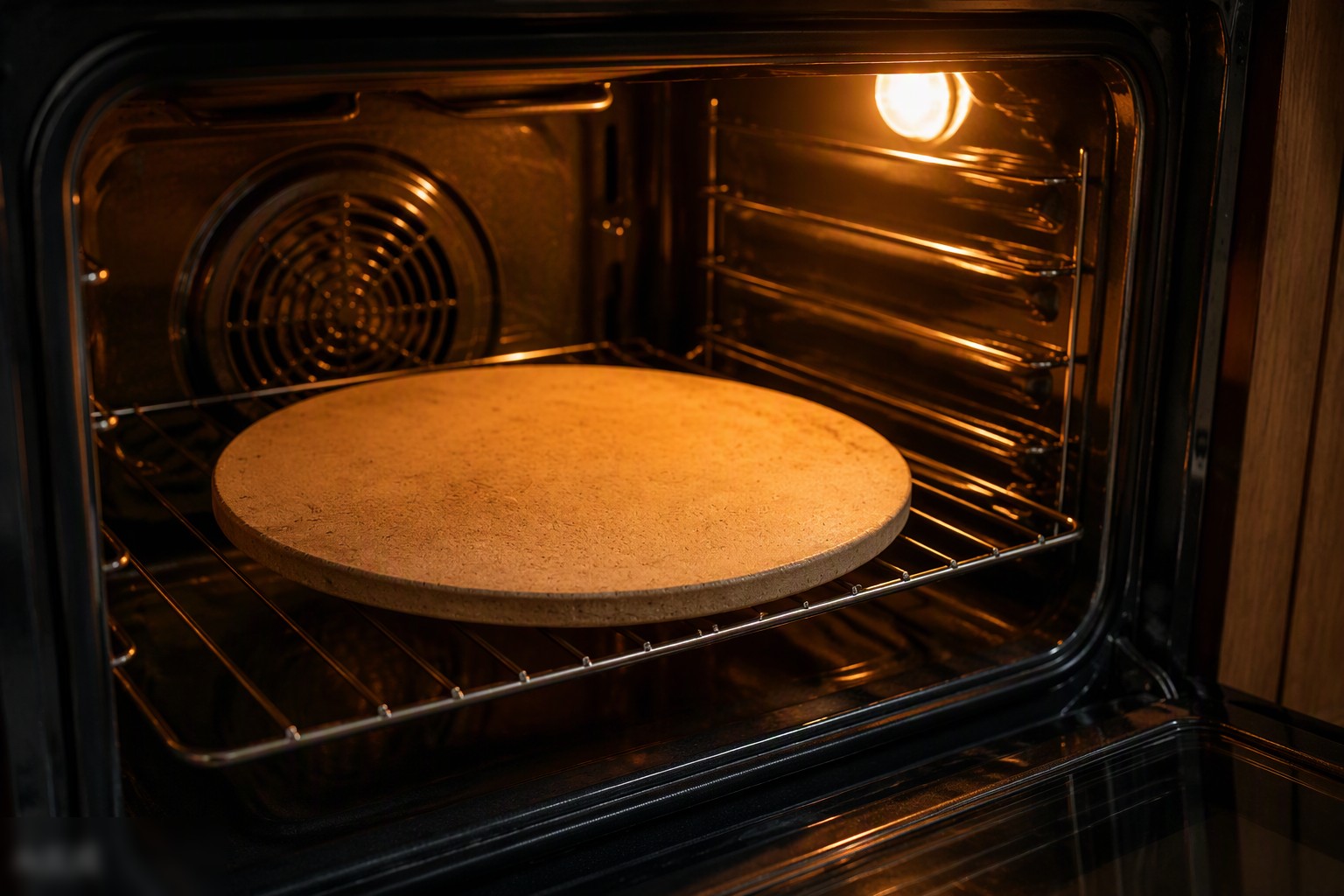
A pizza stone is a heat battery, not a pan. Its entire job is to absorb thermal energy for the whole preheat, then dump that energy into the bottom of your pizza in the first two minutes of the bake. That initial blast is what sets the crust’s structure before the toppings have time to weep moisture into it. A stone that looks hot but is cold two millimeters down runs out of energy the moment the dough touches it, and the crust steams on the surface instead of frying. The result is the telltale pale, chewy-bottomed pizza that slides off floppy when you lift a slice.
This is why the oven’s thermostat reading is nearly meaningless. The air in the oven hits 550°F within 15 minutes, but the dense ceramic body of the stone needs far longer to soak that heat all the way through. Tyrolit’s pizza stone guide puts typical full preheat at 30 to 45 minutes with both top and bottom heat, which matches our measurements: in a 550°F oven, a standard 3/4-inch cordierite stone crosses 500°F on the surface at about the 35 minute mark, and keeps climbing slowly after that. Thicker and denser stones simply need longer to charge. Our best temperature to cook a pizza guide covers the oven side of the equation; this post is about making sure the stone itself actually reaches it.
How Long to Heat, by Stone Type and Oven
There is no single universal number, because preheat time depends on the stone’s thickness and material, your oven’s maximum temperature, and whether you use convection. Use this chart as your starting point, then verify with a thermometer before the first pizza launches.
| Stone type | Thickness | Minimum preheat | Ideal preheat |
|---|---|---|---|
| Thin ceramic or composite stone | 1/4 to 3/8 inch | 30 minutes | 40 minutes |
| Standard cordierite stone | 1/2 to 3/4 inch | 35 minutes | 45 to 60 minutes |
| Thick cordierite or refractory stone | 1 inch or more | 45 minutes | 60 to 90 minutes |
| Baking steel | 1/4 to 3/8 inch | 30 minutes | 45 minutes |
| Stone on a grill (direct heat) | any | 15 to 20 minutes | 30 minutes, lid closed |
Whatever the chart says, placement rules stay constant. AmNow’s stone care guide recommends putting a cool stone into a cold oven and preheating them together, which protects the stone from thermal shock and gives you the most even heat charge. Position the stone on a rack in the upper third of the oven for the best balance of bottom browning and top melting, leave a few inches of clearance from the walls and elements, and run the oven at its absolute highest setting, not the temperature the recipe eventually bakes at. Convection shaves roughly 10 minutes off every row in the chart because the fan moves hot air across the stone’s surface constantly.
How to Tell When the Stone Is Ready

The definitive test takes two seconds and costs about twenty dollars. Point an Etekcity infrared thermometer at the center of the stone, pull the trigger, and read the surface temperature. You are looking for 500 to 550°F. Under 450°F, the crust sets slowly and dries out before it browns; over 600°F on very thin stones, the bottom can char before the cheese melts. The laser dot shows you exactly where you are measuring, so take one reading at the center and one near the edge; a stone with more than a 50°F gap between those two points needs more time.
No thermometer? You have two fallbacks, both less precise. The first is the clock plus a fixed recipe: if you always use the same oven and the same stone, a verified 50 minute preheat is repeatable forever. The second is the water drop test that wikiHow’s pizza stone walkthrough popularized: flick a few drops of water onto the stone, and they should skitter and evaporate within a second or two. Be sparing, since a big splash on a 550°F surface can spatter, and never pour oil on the stone to test it. Honestly, the thermometer pays for itself the first time it saves a pizza, and it doubles as a grill and cast-iron tool for the rest of your cooking life.
Preheat Mistakes That Ruin Pizza and Crack Stones

Almost every cracked stone and every disappointing crust traces back to one of four preheat errors. All of them are easy to avoid once you know them.
- Putting a cold stone into a hot oven: the sudden temperature jump shocks the ceramic and can split it on the spot. Always start the stone in a cold oven. If you own a cordierite pizza stone, it handles thermal stress better than cheap ceramic, but the cold-oven rule still applies.
- Trusting the oven’s beep: the preheat chime measures air temperature near the thermostat, often far from your stone. Treat it as the earliest possible start of the stone’s countdown, never the end.
- Opening the door to check: each peek dumps a pocket of 550°F air and can set the stone back five minutes or more. Use the oven light and the thermometer through the cracked door instead.
- Preheating on the oven floor: direct bottom-element exposure overheats the underside of the stone while the top stays cool, cooking pizzas unevenly and stressing the stone. A rack in the upper third is the right home.
Our how to clean a pizza stone guide pairs well with this one: a stone that is cleaned and stored dry preheats more evenly, since absorbed moisture has to steam off before the surface can climb toward your target.
Stone vs Steel: How Preheat Time Changes

A baking steel conducts heat roughly twenty times faster than stone, which changes the preheat math in your favor. A quality NerdChef pizza steel reaches pizza-ready surface temperatures in 30 to 45 minutes, noticeably quicker than a thick cordierite stone, and it recovers between pizzas almost instantly because the metal wicks heat back to the surface so fast. The trade-off is total heat capacity: a thick stone stores more raw energy, so for four or more pizzas in a row, the stone keeps its temperature deeper into the night, while steel wins for one or two fast, blistered pies. Our pizza stone vs baking steel breakdown weighs the full comparison, and our cordierite pizza stone guide covers the stone side.
Whichever surface you own, the habit that transforms pizza night is the same: start preheating the moment you decide to make pizza, not when the dough is ready. Stone in the cold oven, oven to its max, thermometer check at the 30 minute mark, launch only when the surface confirms it. Do that and the reward shows on the bottom of every pizza: deep golden browning, leopard spots, and a crust that audibly crackles when you slice it. Skip it, and the best dough recipe in the world still comes out tasting like it was baked on a warm sidewalk, which is the real cost of the shortcut.
Frequently Asked Questions
Can you preheat a pizza stone too long?
No, not in a home oven. A stone left at maximum temperature simply reaches equilibrium and holds there. The only real limits are energy waste and, on very cheap thin stones, long exposure to a direct broiler element. There is no flavor or performance penalty for a 90 minute preheat.
Should a pizza stone go in a cold oven or a hot oven?
Always a cold oven. Let the stone heat gradually as the oven comes up to temperature. Putting a cold stone into a fully heated oven creates thermal shock, the number one cause of cracked stones, and it heats unevenly because the surface races ahead of the core.
What temperature should a pizza stone be for pizza?
Aim for a surface temperature of 500 to 550°F (260 to 290°C) for most homemade pizzas baked at 500 to 550°F. That is hot enough to set and blister the crust in the first two minutes. Much below 450°F and the crust dries before it browns; much above 600°F on thin stones and the bottom chars before the toppings melt.
How do you preheat a pizza stone without a thermometer?
Use the water drop test: flick a few drops of water onto the stone after at least 30 minutes of preheating. If they skitter across the surface and evaporate within a second or two, the stone is ready. Otherwise, close the door and give it 10 more minutes. A fixed clock routine with the same oven and stone also works once you have verified it once.
Why did my pizza stone crack during preheat?
Nearly always thermal shock: the stone went into an already-hot oven, touched a heating element, or sat directly on the oven floor where one spot overheated. Cracks also follow moisture absorption, so never wash a stone with soap or leave it soaking. Start it in a cold oven on a middle or upper rack and it should last for years.
Do you preheat a pizza stone for frozen pizza?
Yes. A frozen pizza benefits from the hot stone just as much as fresh dough, and the extra bottom heat helps the center thaw and cook through before the edges over-brown. Use the same 30 minute minimum preheat and the same 500°F-plus surface target.
How long does a pizza steel take to preheat compared to a stone?
About 30 to 45 minutes versus 35 to 60 for a comparable stone, because metal conducts heat far faster than ceramic. Steel also recovers its temperature between pizzas almost instantly, though a thick stone stores more total heat energy for very long, multi-pizza sessions.