Knowing how to warm up pizza in the oven is the difference between a leftover slice that tastes like it just left the pizzeria and one that tastes like a rubbery compromise. Cold pizza has its fans, but a properly reheated slice, crackling bottom crust, gooey re-melted cheese, toppings sizzling, is arguably better than fresh, because the crust gets to crisp twice.
The microwave is the usual move, and it is the wrong one: it steams the slice from the inside out, turning the crust limp and chewy while the cheese goes rubbery. Your oven, with its dry, even, all-around heat, does the opposite, it drives moisture out of the crust surface and re-crisps it while gently melting everything on top.
This guide covers exactly how to warm up pizza in the oven step by step: the right temperature, the best surface (and what to use if you only own a sheet pan), timing for every crust style, the foil debate, food-safety basics for leftovers, and two non-oven backup methods worth knowing.
Key Takeaways
- Warm up pizza in the oven at 375 to 450° F: lower temperatures for sheet pans and thick crusts, higher heat for pizza stones and steels.
- A preheated baking steel or pizza stone re-crisps the bottom crust in 4 to 6 minutes, the closest thing to a pizzeria reheat at home.
- Skip the foil on hot surfaces (it blocks heat transfer), but tent foil loosely over a whole pie or thick slices so the toppings do not dry out.
- Leftover pizza keeps 3 to 4 days in the refrigerator and should be reheated to 165° F for food safety.
Table of Contents

Why the Oven Is the Best Way to Warm Up Pizza
Reheating pizza is really a fight over one thing: moisture. A day in the fridge lets water migrate from the sauce and cheese into the crumb, which is why cold pizza goes soft. The best reheating method is the one that drives that surface moisture back off and re-crisps the crust without drying out the toppings, and that is precisely what an oven does well.
What the Microwave Does to Your Slice
Microwaves heat by exciting water molecules throughout the food at once. In a slice of pizza, that means the water trapped in the crust turns to steam from the inside, softening the crumb and toughening it as it cools, while the cheese overheats in spots and turns greasy. A minute in the microwave gets a slice hot, but it will never get it crisp. If speed is all that matters, fine, but you are trading away the two textures that make pizza worth reheating: a crackly bottom and a chewy, airy edge.
Why Dry, Even Heat Wins
An oven surrounds the slice with dry, radiant heat, so the bottom of the crust crisps while the cheese melts from above, the same physics as the original bake. The team at Baking Steel describe it as searing, not warming: on a surface preheated to 450° F, the already-baked bottom crust sears a second time, the outermost layer caramelizes, and you get a layered crunch that a fresh slice never had. That is the target everything below is built around, and it is why a baking steel earns its keep year-round: the same slab that bakes Friday’s pie reheats Saturday’s leftovers.
How to Warm Up Pizza in the Oven: Step by Step

Step 1: Preheat to the Right Temperature
Set the oven before you do anything else, a fully preheated oven is non-negotiable, because a cold-start oven warms the toppings long before the crust ever crisps. For sheet pans and most slices, 375 to 400° F is the sweet spot. If you are reheating on a pizza stone or steel, go hotter: 450° F. And do not trust the dial, most home ovens run 25 to 50 degrees off in either direction, so I keep a cheap Taylor oven thermometer hanging from the rack to know what my oven is actually doing. (For the fresh-bake side of the temperature question, see our guide to the best temperature to cook a pizza.)
Step 2: Choose Your Surface
What the slice sits on matters as much as the temperature. Best to good:
- A baking steel. A preheated Original Baking Steel dumps heat into the bottom crust faster than anything else in a home kitchen, slices are done in 4 to 6 minutes at 450° F with a genuine sear underneath.
- A pizza stone. A cordierite stone like the Unicook rectangular pizza stone absorbs surface moisture and crisps the crust almost as well, allow a couple of extra minutes, and remember that a pizza stone holds heat for a long time, which works in your favor for back-to-back batches. We compared the two head to head in pizza stone vs baking steel.
- A baking sheet. Perfectly fine, put the empty sheet in the oven while it preheats so the slices land on an already-hot surface, and line it with parchment for easy cleanup.
- Directly on the oven rack. Maximum airflow and crispness, at the cost of the occasional cheese drip. Put a sheet of foil on the rack below to catch anything.
Step 3: Time It by Slice Style
Pull the pizza when the cheese is bubbling and the bottom of the crust sounds hollow when you tap it, but these ranges get you close on the first try:
| Slice Style | Oven Temp | Surface | Time |
|---|---|---|---|
| Thin crust / NY slice | 375, 400° F | Sheet pan or rack | 6, 8 minutes |
| Any slice on steel/stone | 450° F | Preheated steel or stone | 4, 6 minutes |
| Thick crust / Detroit / deep dish | 375° F | Sheet pan, foil tent | 10, 15 minutes |
| Whole leftover pie | 375° F | Sheet pan, foil tent then uncovered | 8, 12 minutes |
| Frozen leftover slices | 375, 400° F | Sheet pan or stone | 12, 18 minutes |
Pro Tips for Reheated Pizza That Tastes Fresh
The Foil Question
Whether to cover pizza with foil depends on the method. Delish’s reheating tests cover the sheet-pan method with foil on the lowest rack so the toppings re-melt without the crust burning, a smart move for thick slices and whole pies. On a preheated steel or stone, though, foil under the slice defeats the purpose: it blocks the direct heat transfer that re-crisps the crust. The rule of thumb: foil on top to protect toppings, never foil between the slice and a hot surface. Worried about drips on your steel or stone? A square of parchment under the slice lets far more heat through.
Storage Comes First
A great reheat starts the night before. According to the USDA’s leftovers guidance, perishable food should be refrigerated within 2 hours of cooking (1 hour above 90° F), and leftover pizza keeps for 3 to 4 days in the fridge or 3 to 4 months in the freezer. Stack slices with parchment or paper towels between layers in an airtight container so they do not glue themselves together, our full breakdown is in the perfect way to store leftover pizza.
Reheat to 165° F for Safety
The same USDA guidance recommends reheating leftovers to 165° F as measured with a food thermometer. In practice, a slice with fully bubbling cheese and a steaming-hot center is there, but if you are reheating a thick Detroit slab or a pie loaded with meat, it is worth a quick probe in the center of the slice to be sure, especially when the pizza has been in the fridge for a couple of days.
Worth Knowing: Two Non-Oven Methods

The Covered Skillet Method
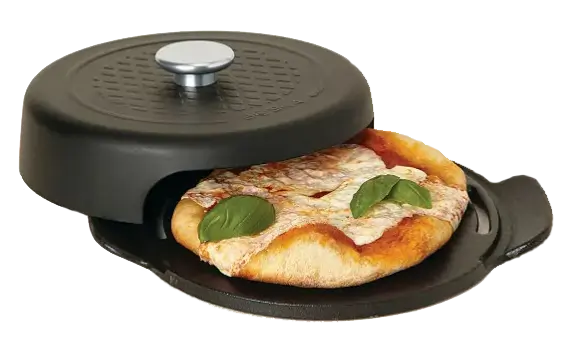
The one method that rivals the oven: set a slice in a dry skillet over medium-low heat, add a few drops of water away from the crust, and cover with a lid for about 2 minutes. The pan re-crisps the bottom while the trapped steam re-melts the cheese, Delish’s tester rated it the best of six reheating methods. It is perfect for one or two slices, but a skillet only holds so much, which is why the oven remains the move for anything more.
The Air Fryer Shortcut
An air fryer is a small convection oven with a turbo fan: 350 to 400° F for 3 to 5 minutes gives you a very crispy single slice, no preheat required. The catch is capacity, one or two slices at a time. We cover timings and basket tricks in our guide to reheating pizza in the air fryer.
Warming Up a Whole Pizza or Frozen Slices

A Whole Leftover Pie
Warming a whole pizza follows the same rules with two adjustments: tent the pie loosely with foil for the first half of the bake so the center heats through before the edges overcook, then uncover for the last few minutes to re-crisp. At 375° F on a preheated sheet pan, figure 8 to 12 minutes total. If you are feeding people outdoors rather than at the table, our guide to keeping pizza warm at an outdoor party covers holding temperature without drying the pie out. And when ferrying a whole reheated pie from oven to counter, a proper peel helps, see our ultimate guide to pizza peels.
Straight From the Freezer
No thawing needed, frozen slices go straight into a 375 to 400° F oven on a sheet pan or stone for 12 to 18 minutes, until the cheese bubbles and the center is hot. Tent foil loosely if the toppings brown before the middle thaws. Frozen-then-reheated pizza will never be quite as lofty as fresh, but a hot surface underneath gets the crust remarkably close.
Frequently Asked Questions
Here are the questions I hear most often about warming up pizza in the oven.
What temperature is best to warm up pizza in the oven?
375 to 400° F for slices on a sheet pan, and 450° F if you are reheating on a pizza stone or baking steel. Always preheat fully, a hot surface is what re-crisps the bottom crust before the toppings overcook.
How long does it take to warm up pizza in the oven?
Thin slices take 6 to 8 minutes on a sheet pan or 4 to 6 minutes on a preheated stone or steel. Thick crusts and whole pies need 10 to 15 minutes, and frozen slices 12 to 18 minutes. The pizza is done when the cheese bubbles and the crust bottom feels crisp.
Should I cover pizza with foil when reheating it in the oven?
Only on top, never underneath. A loose foil tent over thick slices or a whole pie keeps toppings from drying out, but foil between the slice and a hot stone or steel blocks the heat transfer that re-crisps the crust. Use parchment under the slice if you want drip protection.
How do you warm up pizza so it is not soggy?
Skip the microwave, preheat the oven completely, and put the slice on a hot surface, a baking steel, pizza stone, or a sheet pan that preheated with the oven. Direct contact with stored heat drives moisture out of the crust bottom, which is exactly what soggy slices are missing.
How long is leftover pizza good for in the fridge?
Three to four days in an airtight container, per USDA leftover guidance, and it should go into the fridge within 2 hours of being served. For longer storage, freeze slices for up to 3 to 4 months and reheat them straight from the freezer.
Can you warm up frozen pizza in the oven without thawing?
Yes. Put frozen slices straight into a 375 to 400° F oven on a sheet pan or stone and bake 12 to 18 minutes, tenting foil loosely if the toppings brown before the center heats through. Thawing first is unnecessary and makes the crust soggier.