Yes, parchment paper is oven safe. Standard parchment is a cellulose paper treated with a thin silicone coating, and it typically handles 420 to 450°F without burning, smoking, or releasing anything harmful into your food. The limits matter more than the headline: keep it away from open flames, glowing broiler elements, and the walls of a ripping hot pizza oven, and never let a dry, empty sheet sit where it can drift against a heating element. Below is exactly how hot parchment can get, when it stops being safe, and how to use it for pizza without ruining a crust.
If you have ever hesitated with the roll in one hand and the oven door in the other, you are not being paranoid, you are being smart. The box says one temperature, your pizza recipe wants another, and somewhere in the comments someone swears their paper caught fire at 425. We bake on parchment constantly, for cookies, sheet pan pizzas, and launching stubbornly sticky doughs onto a stone, and the confusion is almost always about three specific mistakes, not the paper itself. This guide settles it.
Here is what parchment paper is actually made of, its real temperature ceiling, the situations where it genuinely becomes a fire risk, and the alternatives worth keeping beside it.
Key Takeaways
- Parchment paper is oven safe to the temperature printed on its box, usually 420 to 450°F (215 to 230°C).
- It is silicone coated, not waxed. Wax paper is a different product and is never oven safe.
- Never use parchment under a broiler, on a grill, over an open flame, or loose in a toaster oven where it can touch a hot element.
- For pizza, parchment is a launch aid: bake on it for the first minute or two, then pull it out so the crust can brown directly on the stone or steel.
- For repeated high-heat baking, a reusable silicone baking mat or bare preheated stone is the better tool.
Table of Contents
What Parchment Paper Is (and Is Not)
Parchment paper is regular wood-pulp paper that has been run through an acid bath (the historic method) or, far more commonly today, coated in food-grade silicone. The silicone film is what makes the paper nonstick and heat resistant, and it is why cookies slide off and cheese drips lift away in one sheet. CUNY’s food-packaging safety guide confirms the core point: true parchment is designed for high-temperature baking, and the silicone coating stays stable well past the range of a normal home oven.
The confusion starts with lookalikes. Wax paper is the dangerous one: it looks nearly identical on the roll, but its paraffin coating melts at oven temperatures and can smoke or ignite. Aluminum foil is sometimes confused with parchment too, though it behaves completely differently (it conducts heat rather than insulating from it, and nothing sticks-proof about it). If the box says “parchment” and “oven safe,” you have the right product; if it says “wax paper,” reserve it for countertops and sandwich wrapping.
How Hot Can Parchment Paper Get?
Most parchment sold in grocery stores is rated between 420 and 450°F (215 to 230°C), and that number is printed on the box for a reason: it is the manufacturer’s tested ceiling, not a polite suggestion. Reynolds’ parchment line, the category leader in US grocery stores, is rated right in that band, and pushing past the printed rating is where papers start browning at the edges, growing brittle, and eventually scorching.
Here is the nuance pizza makers care about: the rating is about the paper, not the oven. A home oven set to 550°F does not mean the parchment instantly fails, because a laden sheet pan or a pizza on top of it keeps the paper’s surface far cooler than the air around it. The Daily Meal’s oven-safety breakdown makes the same distinction: parchment performs safely within its rated range, and the real dangers come from contact heat and exposed edges, not the number on the dial. Still, if you routinely bake above 450°F, as the best pizza recipes demand, treat the parchment as a launch tool rather than a baking surface, which the pizza section below covers step by step.
When Parchment Paper Is Not Oven Safe

Parchment fails in predictable ways, and every one of them is avoidable. These are the situations where the paper, not your recipe, becomes the hazard.
| Situation | Why It Fails |
|---|---|
| Under a broiler | Broiler elements run far hotter than 500°F and radiate directly onto the paper. Parchment is not rated for it, full stop. |
| Touching a heating element | Concentrated contact heat scorches paper in seconds, even at a moderate oven setting. Trim overhang so no edge flops against an element. |
| On a grill or open flame | Grates expose paper to flame and superheated air. Parchment belongs in ovens, not on fire. |
| Loose in a toaster oven | The small chamber puts light paper within inches of exposed elements, and convection fans can lift and press it against them. |
| Empty and overextended on a pan | A sheet with no food on it gets much hotter than a laden one, and dangling corners are tinder. |
The pattern in every row is exposure, not temperature alone. Loaded parchment on a sheet pan in a 425°F oven is one of the safest tools in baking; the same sheet, empty, drifting against a glowing element, will char. King Arthur Baking’s parchment guide draws the practical line the same way: respect the printed rating, keep the paper weighted with food, and keep edges away from direct heat sources.
Parchment Paper and Pizza

Parchment earns its keep in homemade pizza as a transfer tool. Build the pizza on a parchment square set on your peel, and the launch stops being a gamble: the paper slides onto the stone or steel, the pizza rides it safely, and even a sticky, high-hydration dough that would normally glue itself to the peel makes it into the oven intact. This is the trick that rescues beginner pizza nights, when a beautiful topped pizza would otherwise fold over itself at the oven door.
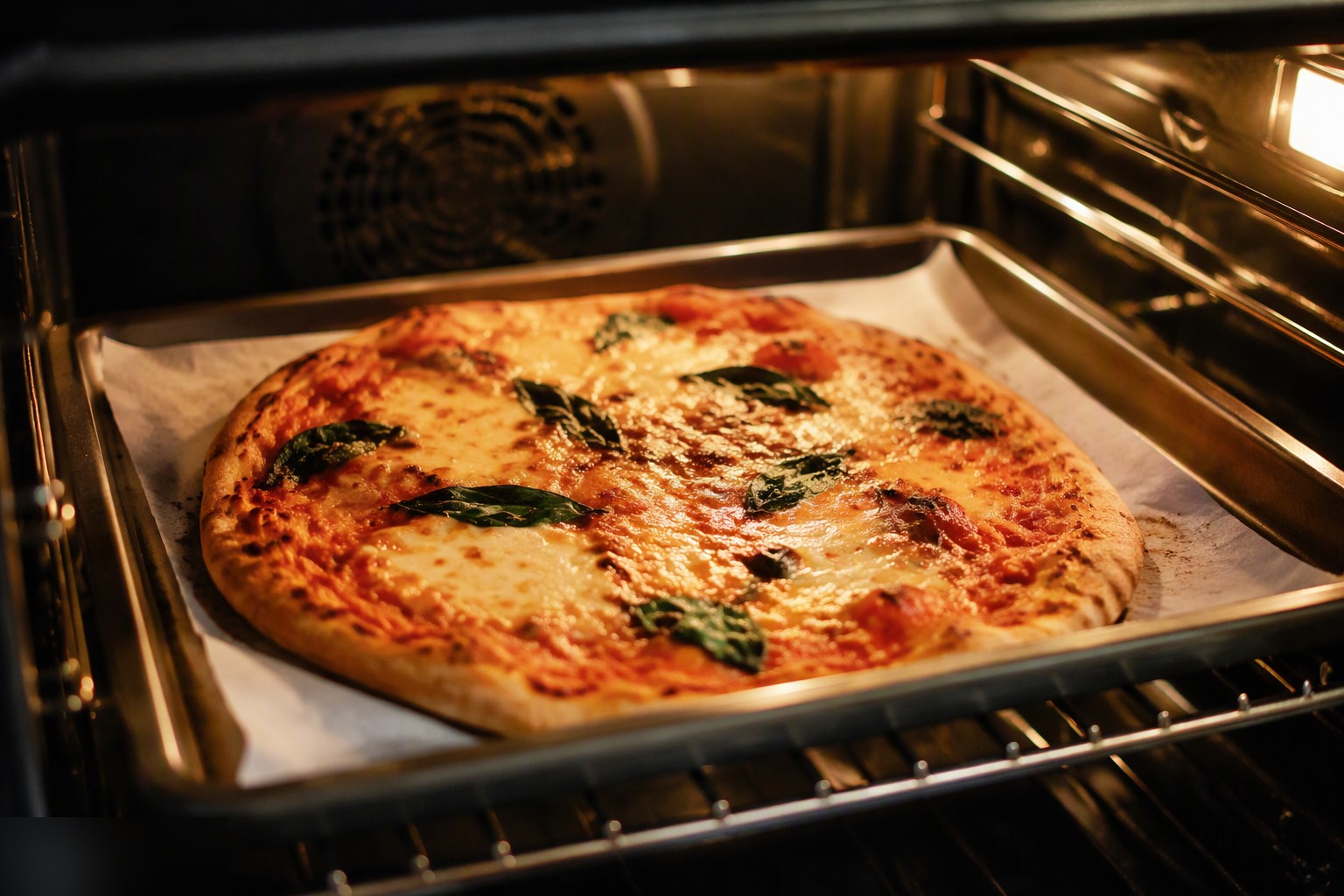
The technique for hot ovens: slide the pizza onto your preheated surface, let it bake on the parchment for 60 to 90 seconds until the bottom sets, then reach in with tongs or the peel tip and yank the paper out from under the crust. The pizza finishes directly on the hot surface, so you keep the blistered, crispy bottom that parchment would otherwise steam and shield away. Our guides to cordierite pizza stones and the stone vs steel decision cover the surfaces you are launching onto, and the right baking temperature matters here: at true pizza temperatures above 500°F, that paper comes out early or not at all.
Two cautions for pizza use. First, never let parchment hang over the edge of a stone in a small pizza oven, where a licking flame can reach it; keep the square trimmed close to the pizza’s diameter. Second, expect the used paper to be brittle and browned after a hot bake: let it cool on the pan, then bin it. It is a consumable, and a cheap one. A quality cordierite pizza stone is the surface doing the real work; the parchment is just the Uber that gets the pizza there.
Parchment Paper Alternatives

Each liner solves a different problem, and keeping all three in a drawer costs almost nothing and covers every scenario.
- Silicone baking mat: reusable thousands of times, heat tolerant to roughly 480°F, and nothing sticks to it. It insulates slightly more than parchment, so cookies spread a touch slower, and it will never scorch. A pair of half-sheet silicone mats pays for itself within a few months of weekly baking.
- Aluminum foil: the high-heat workhorse. It handles any temperature your oven can produce, which makes it the right liner for broiling and roasting, but food sticks unless you grease it, and acidic toppings can react with the metal. Use it where parchment is not allowed, not as a default.
- A bare preheated stone or steel: the best bottom-crust results come from dough in direct contact with a hot surface, no liner at all. Semolina dusting plus a confident launch beats any paper once your dough handling matures; our dough hydration guide explains why wetter doughs are the ones that tempt you toward parchment in the first place.
Choose per job: mat for everyday sheet pan baking, foil for broiling and roasting, stone for pizza with no middleman. Keep parchment for the in-between work: sticky doughs, delicate cookies, and anything you want to lift off the pan cleanly.
Buying and Using Parchment Paper
Buy the pre-cut sheets if you bake often. They lie flat (no fighting a curl from a roll), they fit half-sheet pans exactly, and they stack neatly next to the mixer. A 200-sheet box of SMARTAKE pre-cut parchment, rated to 450°F with a 4.8-star average across tens of thousands of reviews, covers a year of weekly pizza nights for the price of a single delivery pizza. If you prefer a household name, Reynolds pre-cut cookie sheets are the grocery-aisle standard, rated to 425°F and sized for round pans.
Four habits stretch any parchment purchase and keep every bake safe. Match the paper to the pan so edges are weighted, not flapping. Check the rated temperature on the box before a hot bake, not after. For pizza, trim the sheet close to the pizza’s size and pull it early. And when a sheet comes out browned and crispy at the edges, retire it; at pennies a sheet, reusing borderline paper is a false economy that risks your dinner and your oven.
Use it this way and parchment becomes invisible: the pizza slides where you want it, the cookies lift without a fight, and cleanup shrinks to tossing a square of paper. Ignore the limits and you will spend a Friday night airing out a smoke-filled kitchen and scraping charred flakes off your racks, with a takeout menu as your backup plan.
Frequently Asked Questions
Is parchment paper oven safe at 450 degrees?
Most quality parchment is rated to 450°F (230°C), so yes at that exact line, but it is the ceiling, not the comfort zone. Papers rated to 420 or 425°F should stay below their printed number. For bakes above 450°F, use the parchment only as a launch aid and remove it early, or switch to foil or a silicone mat.
Can parchment paper catch fire in the oven?
Yes, but almost always for avoidable reasons: touching a glowing heating element, sitting empty under a broiler, dangling over a pan edge into open flame, or being used well past its rated temperature. Loaded parchment kept inside its temperature rating and away from direct heat sources is one of the most stable materials in a home oven.
Is parchment paper the same as wax paper?
No. Parchment is silicone coated and oven safe to roughly 420 to 450°F. Wax paper is paraffin coated and melts, smokes, and can ignite at oven temperatures. They look similar on the roll, so read the box every time; wax paper is for counters, not ovens.
Can you put parchment paper under a broiler?
No. Broiler elements radiate heat far above parchment’s rating and often make direct contact with the paper. For broiling, use aluminum foil or a bare broiler pan. Parchment belongs in the bake mode of a standard oven, weighted with food, away from the elements.
Is parchment paper safe on a pizza stone?
Yes, with technique. Slide the pizza in on the parchment, let the bottom set for 60 to 90 seconds, then pull the paper out so the crust finishes on the hot stone. Leaving parchment under the pizza for the whole bake shields the bottom from the stone’s heat and costs you the crisp, blistered crust you bought the stone for.
Can you use parchment paper in a toaster oven?
Generally no. Toaster oven chambers are small, elements are close, and convection fans can lift lightweight paper onto a hot element. Manufacturer instructions for most parchment brands advise against it. If you must, cut the sheet small, weight it completely with food, and never leave it unattended.
Is parchment paper toxic when heated?
No, within its rated range. Food-grade parchment uses a silicone coating that is heat stable at normal baking temperatures, and the paper itself is plain cellulose. The paper can scorch and smell unpleasant if overheated, which is your signal to open a window and discard it, but it does not release toxic compounds at proper baking temperatures.