Dry pizza dough almost always means one simple thing: not enough water for the flour you used. The fix, in order: stop adding flour, work in one tablespoon of water at a time while you knead, and rest the dough twenty to thirty minutes so the flour can fully absorb it. Below are all seven fixes that actually work, ranked from fastest to most preventative, plus why dough dries out in the first place and the two habits that make dry dough a problem you used to have.
If you have ever torn open a dough ball to find a crackly, floury surface that refuses to stretch, you are in very good company. Dry dough is one of the most common pizza dough complaints there is, and the internet’s favorite reaction, keep adding flour, is exactly how a slightly dry dough becomes a stiff, cracker-like one. The dough is rarely ruined. It usually just needs water, time, or both, and this guide shows you which one.
Here is exactly how to fix dry pizza dough tonight, from the five-minute fix to the kitchen scale and spray bottle habits that prevent it forever, plus the seven questions everyone asks when their dough feels like modeling clay.
Key Takeaways
- Dry, crackly dough means too little water, full stop. The fix is water added one tablespoon at a time while kneading, never a new batch.
- Rest the dough twenty to thirty minutes after adding water. Flour keeps absorbing liquid long after mixing, and most dry dough fixes itself while it rests.
- Knead a full eight to ten minutes. Dry-looking shaggy dough in the first minutes is often just under-kneaded dough that has not smoothed out yet.
- Cover dough the moment you stop touching it. A dry skin forms within minutes on an uncovered ball, and that skin tears when you stretch it.
- Weigh flour and water with a kitchen scale, and mist the surface before covering. Volume measuring is the number one cause of dry dough, and an uncovered ball is number two.
Table of Contents

Why Pizza Dough Gets Too Dry (and Why Crackly Dough Happens)
Dry dough has three usual suspects, and all three come back to hydration, the ratio of water to flour. First, measuring. A cup of flour scooped from the bag can weigh twenty percent more than the cup the recipe author used, which quietly turns a balanced formula into a thirsty, stiff one. Our pizza dough hydration guide shows the percentages behind this, and The Perfect Loaf’s hydration guide makes the same core point: flour type decides how much water a dough can hold, and bread flour, whole wheat, and 00 flour all drink differently.
Second, time and air. Flour absorbs water slowly, so dough mixed five minutes ago can feel dry even when the ratio is right, and a ball left uncovered forms a skin within minutes as the surface dries out. That skin is what cracks when you stretch it. Third, overcompensation. Dry-feeling dough triggers the flour reflex, more flour on the counter, more flour on the hands, and every addition pushes the dough further from the supple, slightly tacky texture it is supposed to have. The Pizza Heaven’s guide to dry pizza dough walks through the same diagnosis: add water slowly, knead it in fully, and give the flour time to catch up before you judge the dough.
The encouraging news: every one of these causes has a fix that takes less time than re-kneading a new batch. Work through the fixes below in order and stop at the first one that works.
How to Fix Dry Pizza Dough: 7 Fixes
Work through these in order. Each fix is cheap and reversible, and the most common mistake is jumping straight to a new batch before the dough has had a fair chance.
Fix 1, stop adding flour: if your dough feels dry, flour is not the answer, it is the cause. Clear the extra flour off your counter and off your hands. Every tablespoon you remove from the equation brings the dough back toward balance without any water at all.
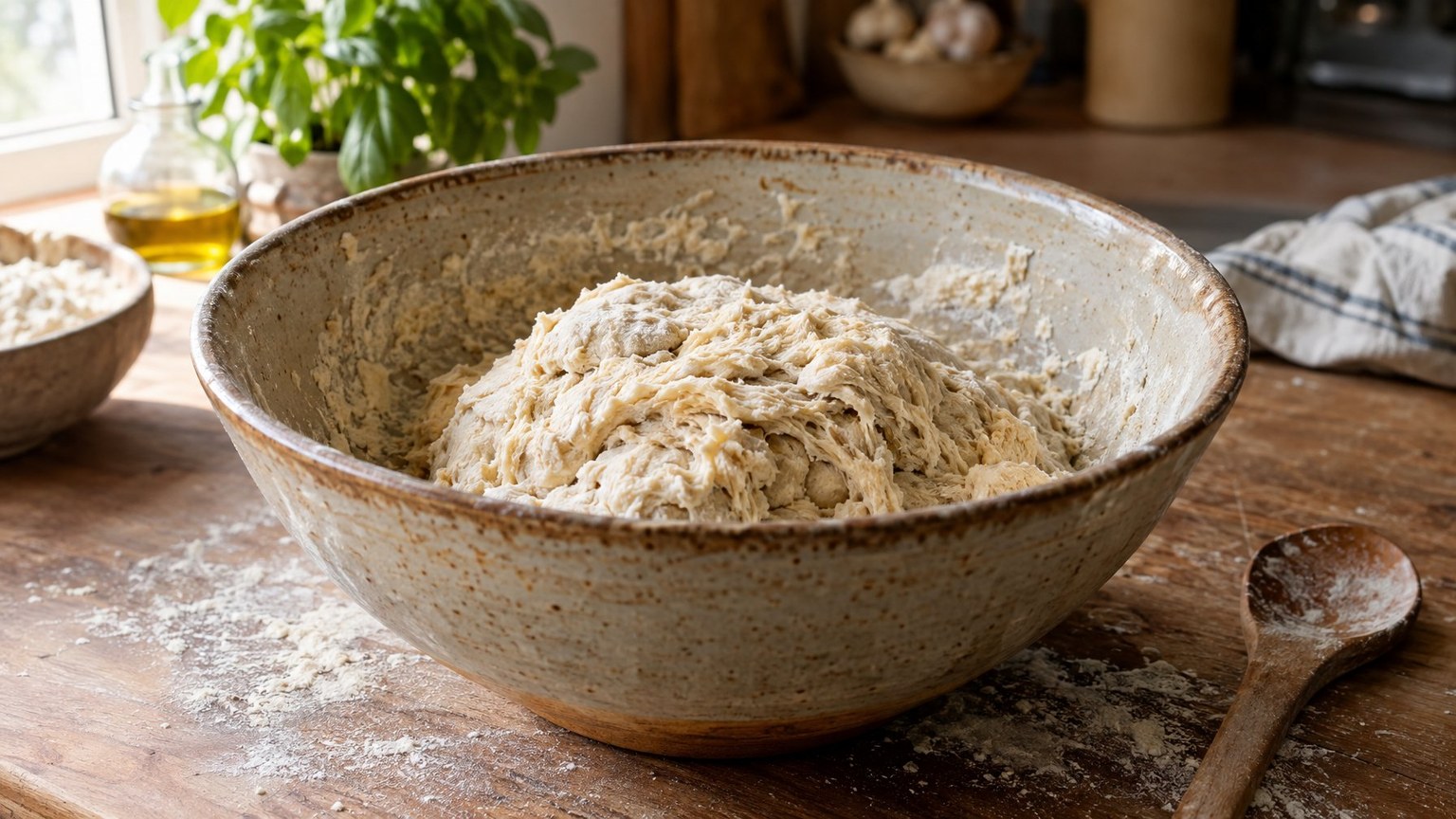
Fix 2, knead five more minutes: dough in the first minutes of kneading looks shaggy, cracked, and thirsty no matter what the hydration is, because the gluten network has not formed yet. That network is what turns a rough, dry-looking mass into a smooth, elastic dough. If you have kneaded less than eight minutes, the dough is not finished, not broken. A Danish dough whisk works the shaggy first stage efficiently inside the bowl, which is exactly when most people panic and reach for more flour.
Fix 3, add water one tablespoon at a time: wet your hand or flick a tablespoon of water onto the dough, then knead it in for a full minute before judging again. Repeat only if needed. The distance between crackly and supple is usually two to four tablespoons for a typical batch, and each one you add patiently is softness the crust keeps.

Fix 4, rest it twenty to thirty minutes: cover the dough and walk away. Flour takes far longer than mixing time to fully hydrate, and dough that felt hopelessly dry at minute ten often turns soft and workable at minute forty with no additions at all. This rest, close to what bakers call an autolyse, is the highest-value step on the list.
Fix 5, knead with damp hands: for a dough that is almost there, kneading with slightly damp hands adds a whisper of water exactly where it is needed while keeping the surface from tearing. Re-wet every minute or so. This one trick resolves most borderline cases without a measuring spoon in sight.
Fix 6, fold with a bench scraper: dry dough tears under the hands, and tearing wastes what little gluten you have. A stiff bench scraper lets you lift, fold, and turn the dough without ripping its surface. Scrape, fold, press, rotate. Ten gentle folds do the work of two minutes of tearing.
Fix 7, if it is already cold, let it warm up: cold dough from the fridge always feels stiffer and drier than it is, because cold tightens the gluten and firms the dough. Give it thirty minutes at room temperature before deciding it needs water. Joe’s Pizza Stone’s troubleshooting guide recommends the same patience for cold dough: warm it, rest it, and only then judge whether anything is actually wrong.
The before and after is worth the patience. The same dough that once cracked and tore under your fingers turns smooth, supple, and just barely tacky, the texture recipes mean when they say soft and elastic. Skip the rest step just once and you will add water the dough never needed, and fight a sticky, slack dough that a half hour of patience would have prevented.
The Fix That Prevents Dry Dough Forever: Weigh and Cover
Here is the uncomfortable truth about dry dough: most of it is a measuring problem. A cup of flour can weigh anywhere from one hundred twenty to one hundred fifty grams depending on how it is scooped and settled, and a recipe written around light cups quietly becomes a dry, stiff dough when your cups run heavy. A digital kitchen scale ends the guessing: three hundred twenty-five grams is three hundred twenty-five grams every time, and your hydration stops being an accident. This is the single upgrade that makes dry-dough emergencies stop happening, which is why weighing is the habit we recommend before any other.

The second habit is coverage. A dough ball left bare on the counter forms a dry skin shockingly fast, and that skin is what cracks during shaping. Cover the bowl tightly the moment you stop kneading, and for extra insurance, mist the surface first. A continuous mist spray bottle lays down an even, gentle layer of water that a wet hand never quite matches, and it takes two seconds. It is the small tool we reach for most on pizza night, which is why it is our favorite pick from this guide.
How to Keep Your Next Batch Soft
Prevention beats repair. Start with the numbers: pick a hydration your flour can actually support and measure it by weight. Lower-hydration doughs are easier for beginners and still bake beautifully, and our pizza dough hydration guide maps the percentages to styles. If your doughs keep turning out dry, add two percent more water next time before you change anything else; small percentage moves are how recipes get dialed in.
Second, mind the timeline. Dough that is rushed, overworked, or left bare while you prep toppings dries out and tightens up. A planned ferment fixes both: our cold fermentation guide builds flavor and handling strength over one to three days, and the fridge keeps the surface from drying while it works. And if your dry dough has a sibling problem, our guides to sticky pizza dough and dough that will not rise cover the other two emergencies in the same fix-first format. Once your dough is soft and relaxed, our guide to stretching pizza dough without tearing it picks up exactly where this one leaves off.

Get these habits in place and the dry-dough emergency becomes a memory: batches come together soft and tacky-right, the surface never skins over, and the crust that comes out of your oven keeps the tender, open crumb that flour-drowned dough never could. The cost of skipping prevention is not one bad pizza night; it is every pizza night quietly defaulting to tough and cracker-like.
Frequently Asked Questions
Can you fix dry pizza dough?
Yes, in almost every case. Knead in one tablespoon of water at a time, rest the dough twenty to thirty minutes so the flour can absorb it, and stop the moment the dough turns soft and slightly tacky. Dough that stays stubbornly dry after that usually just needs one or two more tablespoons and another rest, not a new batch.
Why is my pizza dough dry and crumbly?
Dry, crumbly dough almost always means too little water for the amount of flour, usually because flour was measured by volume. A packed cup can hold twenty percent more flour than a loosely scooped one. The fix is water worked in one tablespoon at a time, plus a twenty-minute rest, not more kneading and definitely not more flour.
How much water do you add to dry pizza dough?
Start with one tablespoon kneaded in fully, then judge. A typical batch needs two to four tablespoons total to go from crackly to supple. Add gradually and rest between additions; water needs time to reach the center of the dough, and overdoing it trades one problem for the opposite one.
Why did my pizza dough dry out while rising?
Dough dries out during a rise when it is not covered tightly. The surface loses moisture to the air, forms a skin, and that skin cracks when you shape the ball. Cover the bowl with plastic wrap or a lid, and mist the surface first if your kitchen is dry. Dough rising in the fridge still needs coverage, because refrigerator air is very dry.
Is dry pizza dough the same as over-kneaded dough?
No. Over-kneaded dough feels tight and snaps back when stretched, but it is usually smooth and elastic, not cracked and floury. Dry dough is a hydration problem. If your dough is smooth but fighting you, let it rest; if it is rough and cracking, it needs water one tablespoon at a time.
Can dry pizza dough still rise?
Yes, but poorly. Yeast needs moisture to work, so a very dry dough ferments slowly and unevenly, giving you a dense, flat crust with a tough rim. If your dry dough has barely moved after a few hours, work in water one tablespoon at a time, rest it, and let it rise again in a warm, covered spot. Our pizza dough not rising guide covers the other causes if more water does not solve it.
How do you keep pizza dough from drying out overnight?
Put the dough in a lightly oiled bowl, mist the surface with water, cover the bowl tightly with plastic wrap or a lid, and refrigerate. The oil, the mist, and the tight cover together keep the surface soft for up to three days. Let the dough warm on the counter for thirty to sixty minutes before shaping, since cold dough feels drier and stiffer than it really is.