Sticky pizza dough almost always comes down to one of three things: more water than your flour can handle, a dough that has not finished kneading or resting, or a handling problem that more flour will not fix. The fix, in order: keep kneading for five more minutes, rest the dough twenty to thirty minutes so the flour can fully absorb the water, and only then work in additional flour one tablespoon at a time. Below are all seven fixes that actually work, ranked from fastest to most preventative, plus why dough gets sticky in the first place and how to make sure your next batch starts right.
If you have ever stood over a counter with dough glued to your fingers, your ring, and somehow the inside of your wrist, wondering what the recipe did not tell you, you are in very good company. Sticky dough is the single most common pizza dough complaint there is, and the internet’s favorite advice, just add more flour, is exactly how good dough turns dense and bready. The dough is rarely ruined. It usually just needs time or technique, and this guide shows you which one.
Here is exactly how to fix sticky pizza dough tonight, from the five-minute fix to the kitchen scale trick that makes sticky dough a problem you used to have, plus the seven questions everyone asks when their dough will not behave.
Key Takeaways
- Newly mixed dough is supposed to be sticky. Knead a full eight to ten minutes before you change anything; gluten development takes stickiness away on its own.
- Rest the dough twenty to thirty minutes before adding flour. Flour keeps absorbing water long after mixing, and most sticky dough fixes itself while it rests.
- Add flour one tablespoon at a time, and knead a full minute between additions. Big handfuls are how dough goes from sticky to stiff and heavy.
- Wet hands beat floured hands for kneading sticky dough. Water prevents sticking without changing the recipe.
- Weigh flour and water with a kitchen scale next time. Volume measuring is the number one cause of sticky dough, because a cup of flour can vary by twenty percent or more.
Table of Contents

Why Pizza Dough Gets Sticky (It Is Not Always Too Much Water)
Sticky dough has three usual suspects, and only one of them is the recipe. First, hydration: the ratio of water to flour. Higher hydration doughs are stickier by nature, and our pizza dough hydration guide shows how to hit the percentage your style needs. If you measured flour by the cup, you may have added twenty percent less than the recipe assumed, which quietly pushes a normal dough into sticky territory. Stadler Made’s sticky dough guide makes the same point: too much water is only one of six common causes, and flour type, kneading, salt, and even old flour that has absorbed kitchen humidity all play a part.
Second, gluten development. A dough two minutes into kneading is a sticky mess no matter what the hydration is, because the gluten network has not formed yet. That network is what turns a wet paste into an elastic, handleable dough. Third, time. Flour takes a surprisingly long time to fully hydrate, and dough that feels impossibly sticky at minute five often feels tacky-perfect at minute thirty with no flour added at all. Red Star’s baking troubleshooting guide lists sticky dough as a top complaint with a simple first check: not enough flour was used, or the flour amount varied, which is exactly what happens with cup measuring.
The encouraging news: every one of these causes has a fix that takes less time than scraping dough off your hands. Work through the fixes below in order and stop at the first one that works.
How to Fix Sticky Pizza Dough Tonight: 7 Fixes
Work through these in order. Each fix is cheap and reversible, and the most common mistake is jumping straight to number three before the dough has had a fair chance.
Fix 1, keep kneading: gluten development takes eight to ten minutes of real kneading. In the first minutes the dough sticks to everything; around minute six it starts pulling away from the counter on its own. If you have kneaded less than eight minutes, the dough is not finished, not broken. A Danish dough whisk handles the shaggy first stage in a bowl and keeps the early mess off your counter, which is when most people panic and reach for extra flour.
Fix 2, rest it twenty to thirty minutes: cover the dough and walk away. This pause, close to what bakers call an autolyse, lets flour particles finish absorbing water and lets gluten relax. Dough that was glued to your fingers often turns merely tacky after a half hour, with zero flour added.
Fix 3, add flour one tablespoon at a time: if the dough is still sticky after resting, sprinkle a single tablespoon of flour over the dough, knead it in for a full minute, and re-check. Repeat only if needed. The distance between sticky and stiff is about three to four tablespoons for a typical batch, and each one you skip is airiness you keep in the crust.
Fix 4, wet your hands: for kneading, damp hands prevent sticking without changing your formula at all. Keep a bowl of water beside the dough and re-wet every minute or so. This one trick solves most sticky-dough handling complaints.

Fix 5, fold with a bench scraper: when dough sticks to the counter, a stiff bench scraper lets you lift, fold, and turn the dough without tearing its developing gluten strands or burying it in flour. Scrape, fold, press, rotate. Ten folds do the work of two minutes of chaotic hand-kneading.
Fix 6, check your salt and yeast: a batch made without salt feels noticeably sticker and slack, because salt tightens the gluten network. If your dough is sticky, pale, and bland-tasting, a forgotten teaspoon of salt is a real suspect. Too much yeast also makes dough slack as fermentation races, so measure both carefully.
Fix 7, chill it: a dough that is sticky and warm from overworked gluten relaxes noticeably after fifteen minutes in the fridge. Cold firms the fat in the dough, tightens the surface, and slows fermentation, which buys you a calm window for shaping. My Pizza Corner’s dough problems guide recommends the same pattern for sticky dough: knead in flour gradually, rest, and only then shape with plenty of flour on the surface.
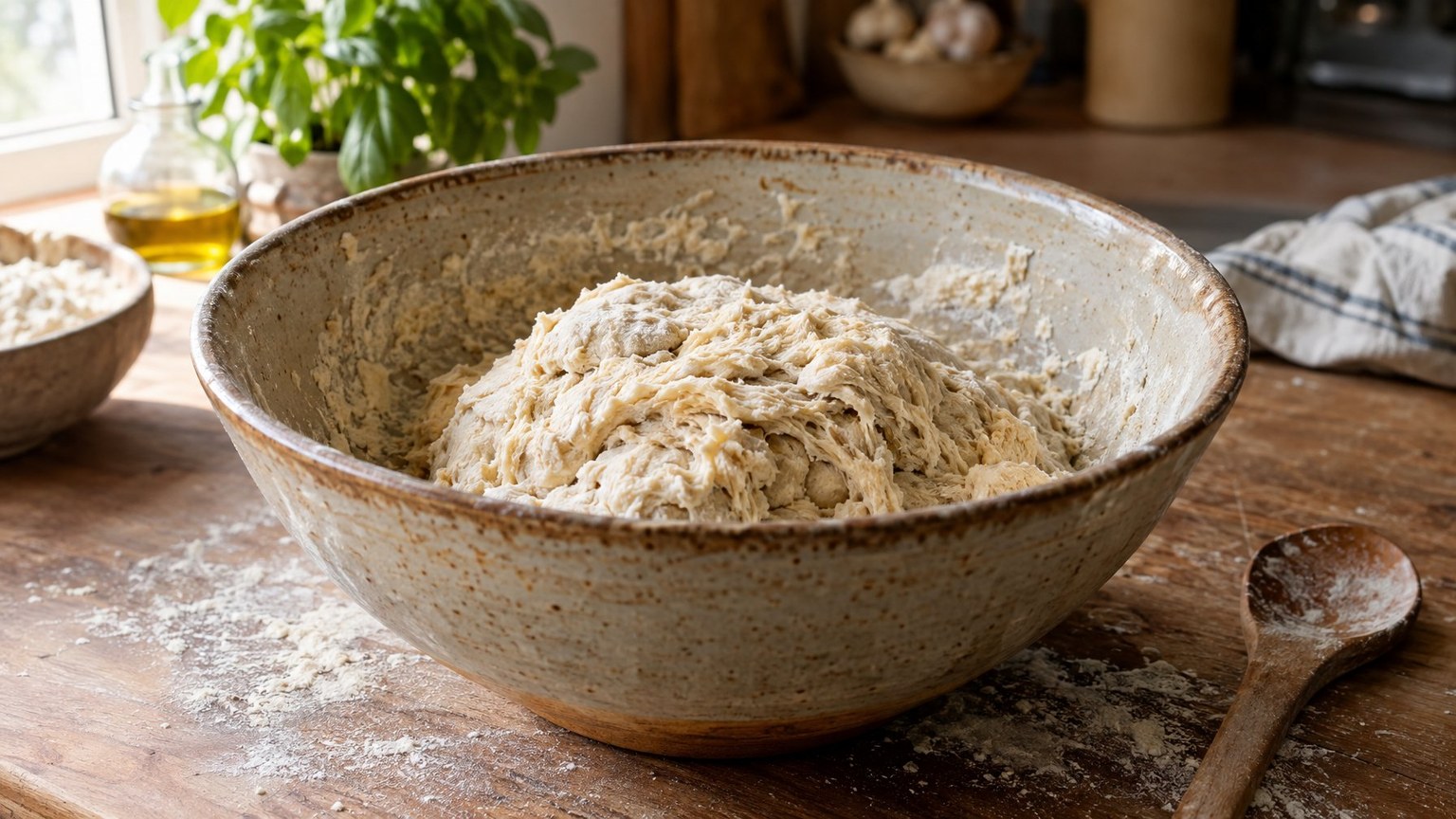
The before and after is worth the patience. The same dough that once glued itself to the counter turns smooth, supple, and just barely tacky, the texture recipes mean when they say soft but not sticky. Skip the rest step just once and you will add flour the dough never needed, and taste the dense, bready crust that decision costs you.
The Fix That Prevents Sticky Dough Forever: Weigh Your Ingredients
Here is the uncomfortable truth about sticky dough: most of it is a measuring problem. A cup of flour scooped straight from the bag can weigh anywhere from one hundred twenty to one hundred fifty grams depending on how it settles and how hard you pack it. A recipe written assuming one hundred thirty-gram cups quietly becomes a high-hydration dough when your cups run light, and high hydration means sticky dough. A digital kitchen scale ends the guessing: one hundred sixty grams is one hundred sixty grams, every single time, and your hydration stops being an accident.

Weighing also makes recipes portable between flours, because grams translate across brands in a way cups never will. Serious pizza recipes list baker’s percentages for exactly this reason, and once you start weighing, the sticky-dough emergency stops happening entirely. That is why the scale, not the bag of extra flour, is the real upgrade: it fixes the cause instead of the symptom, and your crust keeps the openness that makes homemade pizza worth making.
How to Keep Your Next Batch From Getting Sticky
Prevention beats repair. Start with the flour: different flours absorb water differently, and matching flour to hydration matters more than any technique. Italian-style 00 flour is finely milled and takes water beautifully at moderate hydrations, while strong bread flour and whole wheat drink much more before they feel dry; our all-purpose flour for pizza dough guide and 00 flour guide map the differences. If you keep landing in sticky territory, drop your hydration five percent before you blame your hands.
Second, mix cooler and rest longer. Warm dough ferments faster, gets slack faster, and sticks more. Lukewarm water is enough, and a twenty-minute autolyse after mixing does more for dough handling than any gadget. Third, plan the timeline so the dough is never rushed: our cold fermentation guide builds flavor and handling strength over days, and a relaxed, well-fermented dough is dramatically easier to work with than a same-day rush job. Once your dough is fixed and smooth, our guide to stretching pizza dough without tearing it picks up exactly where this one leaves off.

Get these habits in place and the sticky-dough emergency becomes a memory: batches come together smooth and tacky-right, the counter stays mostly clean, and the crust that comes out of your oven keeps the open, airy crumb that flour-drowned dough never could. The cost of skipping prevention is not one bad pizza night; it is every pizza night quietly defaulting to dense.
Frequently Asked Questions
Is it normal for pizza dough to be sticky at first?
Yes, completely. In the first few minutes of mixing and kneading, every dough is sticky because the gluten network has not formed yet. Knead the full eight to ten minutes before changing anything. Dough that is still sticky after proper kneading and a twenty-minute rest is the kind that needs fixing.
Should I keep adding flour until pizza dough is not sticky?
No. Adding flour until the dough feels dry is the most common way homemade crust turns dense and bready. Add flour one tablespoon at a time, kneading a full minute between additions, and stop the moment the dough turns tacky rather than sticky. Wet hands and a rest accomplish the same handling fix without altering your recipe at all.
Why is my pizza dough sticky after rising?
Sticky dough after a rise usually means overproofing. Yeast ferments the flour and eventually the gluten network weakens, turning the dough slack, sticky, and hard to shape. The fix is to shape sooner next time, or to re-ball the dough, rest it twenty minutes, and use it quickly. A cold ferment in the fridge gives you much more margin.
Does sticky pizza dough mean too much water?
Often, but not always. Too much water is only one cause. Under-kneaded dough, flour measured by volume, a missing pinch of salt, old flour, or dough that simply has not rested long enough all feel sticky too. Before adding water or flour to the recipe, knead fully and rest thirty minutes; that resolves most cases with no recipe change at all.
How do I knead sticky dough without it sticking to everything?
Use wet hands instead of floured ones, keep the dough moving with a bench scraper for folding and turning, and give it a twenty-minute rest the moment it fights you. A dough whisk handles the shaggiest stage inside a bowl. Together these keep the dough off your counter and the extra flour out of your crust.
Is wetter pizza dough better?
Higher hydration can produce a lighter, more open crumb, but only when the dough is handled well and your flour, oven, and technique can support it. For most home kitchens, sixty to sixty-five percent hydration gives an excellent crust without the sticky-dough battles. Chasing seventy percent or higher before mastering handling just trades flavor for frustration.
Can you fix sticky dough after it has been proofing?
Yes. If proofed dough turns sticky and slack, lightly flour the surface, fold the dough over itself a few times to rebuild tension, and re-ball it. Rest twenty to thirty minutes at room temperature, or slow it down in the fridge. If it was badly overproofed, the crust will be a little flatter than ideal, but it will still bake into a perfectly good pizza.